Section III · Fee Schedule
How an Engagement Is Scoped and Priced
Every matter begins with a conflict check, then a paid Assessment that establishes what the evidence will support. Engagement fees are quoted from the Assessment, never before it.
Why the sequence matters. Pricing an expert engagement before anyone has examined the evidence produces a guess, and guesses get renegotiated. The Assessment replaces that with a defined first step: the evidence is inventoried, provable questions are separated from unprovable ones, preservation and spoliation risks are identified, and the engagement comes back priced. Counsel receives a number they can budget against and written work product they can use whether or not they go further.
Stage One · Conflict Check and Fit Call15 minutes. Conflicts, subject-matter fit, and whether an Assessment is warranted. No obligation.
Free
Stage Two · AssessmentEvidence inventory, what is provable and what is not, what is missing and what acquiring it costs, custody and spoliation risk, and priced engagement options.
From $5,000bookable above
Stage Three · EngagementForensic examination, expert reports, rebuttals, and standard of care opinions. Fixed fee against a scope both sides already understand.
Quotedin the Assessment
Stage Four · TestimonyDeposition, arbitration, and trial testimony. Billed hourly, never folded into a fixed fee, and identical for every party in every matter.
$2,500per hour, four-hour minimum
Assessment Options
Focused AssessmentOne artifact and one question: a single video, device, wallet trace, or message header set.
$5,000bookable above
Standard AssessmentMultiple custodians or sources. Full evidence inventory across devices, accounts, and chains, with priced engagement options.
$10,000bookable above
Breach Position AssessmentFor a breached organization and its counsel: what happened, what was taken, what is reportable, and what is provable if the matter becomes litigation.
$10,000bookable above
Complex and Enclave AssessmentControlled Unclassified Information, multi-chain cryptocurrency tracing, or a large discovery corpus. Handled inside the FIPS enclave described below.
From $20,000after a scoping call
Supporting Rates
Forensic Acquisition and PreservationForensically sound imaging with documented chain of custody, billed per device. Acquisition is quoted separately from analysis so evidence volume is visible up front.
From $3,000per device
Advisory and Second Opinion SessionDirect access for a defined question: architecture, compliance posture, or a second opinion on a live problem. Delivered via Zoom or Microsoft Teams.
$2,500per session, up to 45 minutes
Emergency Incident Response AssessmentLive triage for an active breach, ransomware event, business email compromise, or account takeover: containment priorities, evidence preservation, and immediate next steps. Prepaid, scheduled at the earliest open slot, and scoped by the incident rather than by the hour.
$5,000plus applicable sales tax, bookable above
Preferred Expert Standing RetainerFirm-level annual arrangement: unlimited conflict checks, a set number of preliminary case screenings, priority scheduling, and a guaranteed response window.
From $30,000per year
On-Site EngagementsIn-person testimony, on-site acquisition, and keynotes are vetted and quoted separately, including travel.
Quotedcontact sales
If the first fifteen minutes of an Assessment show that I am not the right expert for your matter, I will say so and you will not be charged.
Where your evidence is handled. Analysis is performed inside a FIPS-validated, air-gapped enclave that Petronella Technology Group, Inc. owns and operates. No commercial cloud artificial intelligence provider, no third-party processor, and no subcontractor receives your client's data at any point. Every analytical step is logged and reproducible, the methodology is stated in the report, and every asserted fact is independently verified against the underlying artifact. Deliverables are transmitted through PreVeil. For matters involving Controlled Unclassified Information or covered defense information, that is not a convenience, it is a precondition most examiners cannot meet.
Assessments and fixed-fee engagements are payable 100% upfront at engagement. Sales tax is added at checkout where applicable. Fees are never contingent on findings, testimony, or the outcome of the matter. Hourly rates apply to deposition, testimony, arbitration, and time spent responding to discovery. Expert work begins once the engagement letter is signed and the retainer is received. Questions: [email protected] or (919) 348-4912.
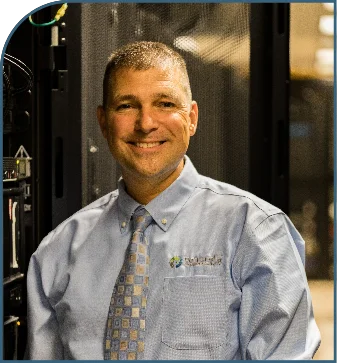
Craig has provided expert witness testimony against some of the largest cryptocurrency exchanges and telecommunications companies in the United States, and has been retained in some of the largest SIM swap and cryptocurrency fraud cases in history. His litigation practice covers forensic preservation and chain of custody, technical assessment of digital evidence, frame-level video analysis, written expert reports, rebuttals, depositions, and trial testimony.
How an engagement works: it starts with a free conflict check and scoping call. You receive an engagement letter defining scope, deliverables, fees, and independence terms. Analysis begins once the letter is signed and the retainer is received. You get a verbal findings briefing first, then written work product as the matter requires. Deposition, arbitration, and testimony time is billed at $2,500 per hour with a four-hour minimum, at the same rate for every party in every matter. Examination and report work is a fixed fee, scoped and quoted in the Assessment rather than billed by the hour, and is never contingent on findings or outcome.
Fees are never contingent on findings, testimony, or case outcome. That independence is what makes the testimony defensible under cross-examination.
Independence is non-negotiable. Retention is for an independent expert opinion on what the evidence does and does not show. Fees are never contingent on findings or outcome, which is exactly what makes the testimony defensible under cross-examination.
Case specializations include cryptocurrency fraud and tracing, hidden digital assets in divorce and bankruptcy, ransomware kill chain analysis, business email compromise and wire fraud, data breach and exfiltration forensics, HIPAA violation investigations, and regulatory standard-of-care opinions covering CMMC, NIST 800-171, HIPAA, FTC, and SOC 2 matters.
Stalking and technology abuse matters. These are accepted through counsel. Where a client is being monitored, the work divides into two parts that must happen in the right order. Examination establishes what is on the devices and accounts and preserves it in a form that supports a protective order or a criminal referral. Hardening then closes the access: credentials, sessions, recovery methods, shared carrier and cloud plans, location sharing, trackers, vehicle telematics, and connected home systems. Examination begins at $5,000 and hardening begins at $7,500, scoped to the number of devices and accounts involved.
Order matters more than speed here. Hardening destroys evidence, and cutting off an abuser's access can be detected and can escalate risk to the client. Nothing is changed until the evidence position is understood and the client, their counsel, and where appropriate their advocate have decided on timing. That decision belongs to the client, not to the examiner. If you are in immediate danger, call 911. The National Domestic Violence Hotline is available around the clock at 800-799-7233, and the Safety Net project at the National Network to End Domestic Violence publishes technology safety planning guidance for survivors and advocates.
From a private virtual session: a recorded working session (on request), a prioritized action plan, and direct answers to the questions you brought. Half-day and full-day formats add written deliverables: compliance roadmaps, architecture reviews, and AI adoption plans. Build work is scoped and quoted separately. Craig prepares before every session using the intake materials you provide after payment, so the clock starts on substance, not background.
From an expert witness retention: forensically sound evidence preservation with documented chain of custody, a technical assessment of the digital evidence, a verbal findings briefing so counsel can make strategy decisions before anything is committed to paper, and then written summaries, filed expert reports, rebuttals, deposition testimony, or arbitration and trial testimony as the matter requires. Each deliverable tier is priced in the engagement letter so there are no surprises mid-case.
From the free consultation: a straight answer. Whether your matter needs an expert at all, roughly what it will cost, what evidence must be preserved immediately before it is lost, and which engagement format fits. Fifteen minutes with the right expert at the start of a matter routinely prevents the two most expensive mistakes in digital disputes: spoliation of evidence and paying for the wrong scope.
What happens after I book the free 15-minute consultation?
You receive an immediate email confirmation with a calendar invite. On the call, Craig scopes your matter, runs a quick conflict check if it is a litigation matter, and recommends the right engagement: an hourly arrangement, a flat-fee retention, or a private virtual session. There is no obligation and no sales pressure; if it is not a fit, Craig will say so and point you in the right direction.
What are Craig's current rates?
Every matter starts with a free 15-minute conflict check, then an Assessment: $5,000 focused on one artifact and one question, $10,000 for a multi-source evidence inventory, and $10,000 for a Breach Position Assessment. The Assessment establishes scope and returns priced engagement options, so examination and report work is a fixed fee rather than an open hourly meter. Deposition, arbitration, and testimony time is $2,500 per hour with a four-hour minimum. Forensic acquisition is from $3,000 per device. Advisory sessions are $2,500 for up to 45 minutes, and private virtual strategy sessions remain $5,000 for two hours, $12,000 for a half day, and $25,000 for a full day. Emergency incident response assessments for an active breach are $5,000 plus applicable sales tax, scheduled at the earliest available slot and scoped by the incident rather than by the hour. All fixed fees are payable 100% upfront at engagement, plus sales tax where applicable.
How does an expert witness engagement start?
Book the free consultation for a conflict check and scoping discussion. If the matter is a fit, you receive an engagement letter defining scope, deliverables, fees, and independence terms. Analysis begins once the letter is signed and the retainer is received. Evidence intake follows forensic preservation and chain-of-custody procedures from the first file.
Are Craig's opinions independent?
Yes, and this is contractual. Retention is for an independent expert opinion on what the evidence does and does not show. Fees are never contingent on findings, testimony content, or case outcome. That independence is what makes the resulting testimony credible and defensible under cross-examination.
Are sessions in person or virtual?
All standard paid engagements are delivered virtually via Zoom or Microsoft Teams, which keeps scheduling fast and rates efficient. In-person testimony, on-site assessments, and keynote appearances are available but must be vetted and are priced separately, including travel. Contact
[email protected] for on-site requests.
Who actually delivers the work?
Craig, personally. Private sessions, expert opinions, testimony, and forensic conclusions are his own work product, backed by the team and tooling of Petronella Technology Group, Inc. where an engagement needs lab capacity or additional analysts.
What should I prepare before a paid session?
After payment you receive preparation materials from Craig before the session. For strategy sessions, bring your current architecture, compliance posture, or AI initiative details. For litigation matters, have the case timeline, the evidence inventory, and your key questions ready; do not send evidence files until intake procedures are in place.
What is the refund and cancellation policy?
Private virtual sessions are prepaid via Stripe and non-refundable, which is what keeps Craig's calendar honest for everyone. If a genuine conflict arises, contact
[email protected] as early as possible to discuss rescheduling. Expert witness retainer terms, including any early-termination provisions, are defined in each engagement letter.
How far in advance should testimony be scheduled?
Virtual deposition, arbitration, and testimony time requires advance notice, typically five or more business days, and is scheduled within standard business hours Eastern Time. Booking early protects your litigation calendar; trial dates and in-person appearances need longer lead time and separate vetting.
Is my information confidential?
Yes. Litigation matters are handled under the engagement letter's confidentiality terms and, where counsel directs, under privilege through the retaining attorney. Strategy sessions can operate under NDA on request. Evidence and client materials are processed with forensic handling procedures, and nothing about your matter is disclosed, referenced, or used as marketing without written permission.
How do conflict checks work for litigation matters?
Before any engagement letter is issued, Craig runs a conflict check against current and former clients and adverse parties. Bring the party names to the free consultation. If a conflict exists you will be told immediately, before any confidential case detail is shared, and where possible you will be pointed to alternative qualified experts.
Can Craig help with CMMC or AI even if we are not in litigation?
Yes. A large share of private sessions are strategic, not litigation-driven: defense contractors planning CMMC 2.0 scope and enclaves, executives pressure-testing AI adoption plans against security and regulatory risk, and firms that want a senior second opinion before a major architecture or vendor decision. Start with the free consultation or book a session directly above.